11

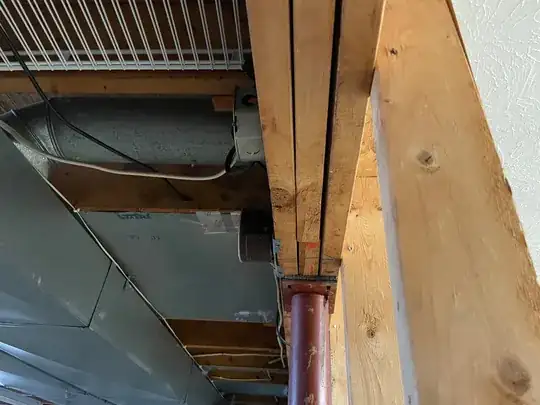
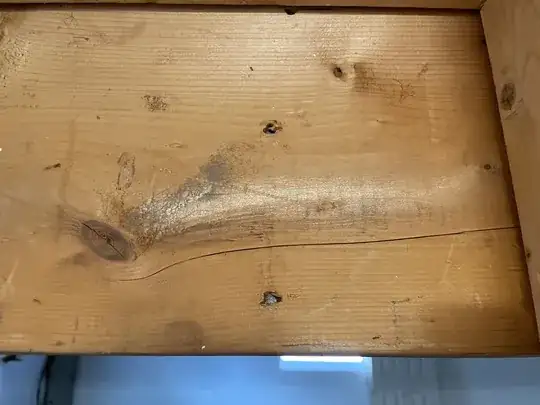
We recently purchased a home and are remodeling our basement. I’m not super knowledgeable about stuff like this and that’s why I hired this out instead of doing it myself. They have taken the old wall down to the studs and I was looking at this after they left. There is a crack in one of the main support beams.

Is this something to worry about? I have no idea how long it’s been there. The house was built in 1975 and we did have a home inspection and no issues were found in regards to the structure. Just looking for advice here. Is this serious?

enter image description here

enter image description hereenter image description hereenter image description here

FreeMan
  • 47,262
  • 25
  • 88
  • 193
Mitch DiMauro
  • 131
  • 1
  • 5
  • If all these cracks are near the support, and almost identical on both sides/faces of the built-up beam, I would be concerned, as the wood is splitting. – r13 Feb 07 '22 at 22:04

2 Answers2

16

The jaggy diagonal crack looks like it was caused by stress and not just drying, unlike most of the others. I'd have that looked at. It's a bit odd that the top of the beam is cracked. That would indicate extreme tension there, but you haven't mentioned any serious deflection causing it. You want to know, from a qualified pro (reputable carpenter, inspector, engineer, or whoever is available):

  • Why did that member crack?
  • Does it need to be replaced to maintain the integrity of the beam?
  • How would that be done?

Cracks like in the last photo are normal and not a problem. Wood always "checks" as it dries out, and as long as it follows the grain it's ok.

Also, it's odd that the center beam member butt joint doesn't occur over the post flange. This would've been considered a mistake by most carpenters even in the 1970s.

isherwood
  • 137,324
  • 8
  • 170
  • 404
  • 2
    +1 for noticing the middle beam is sistered. (Nailing for sistered joist is terrible. I wonder if it’s really a major load bearing beam.) – Lee Sam Feb 07 '22 at 18:05
  • 1
    what does that mean? I'm pretty confident its load bearing as it runs the length of the basement and has the tally columns supporting it. – Mitch DiMauro Feb 07 '22 at 18:09
  • 2
    @LeeSam, in the 1970s everything was nailed. Not at all uncommon. There really was no alternative unless you used bolts, but that was considered overkill for the fairly modest homes usually built back then. I don't consider it alone a concern here. And yes, this is the primary floor system beam. – isherwood Feb 07 '22 at 19:08
  • 1
    Oops I was referring to the quantity of nails… not referring to a different kind of fastener. – Lee Sam Feb 08 '22 at 04:59
  • 1
    Something is sinking off camera. The jackpost is holding the beam there and the crack is at the top of the member so it seems the house to camera-left of the main shot is sinking. Maybe there's another jackpost further down that needs adjusting? – J... Feb 08 '22 at 13:06
  • 1
    @isherwood You said it's being caused by stress and advised OP to ask why it cracked - I'm just adding some more detail. The beam is in tension at the top, so either the house is sinking to the left of the post or something extremely heavy is living upstairs. If OP means to determine what's going on, those are places to look. Your answer is good, and I agree they should get in inspected. It can help to have a look around first, though, so that they can make the most of their time with the engineer. – J... Feb 08 '22 at 14:10
  • 2
    If I stand along the far wall I can tell to the left of the photo it is sinking just a tiny bit. You are absolutely correct and I can see it if I'm looking for it. Since the home was built in the 1970s do you guys think its just normal settlement for its age? I also have a closet door upstairs on that side of the house that sticks a little bit. Maybe that's why! – Mitch DiMauro Feb 08 '22 at 15:52
  • 1
    @MitchDiMauro Hard to say without seeing it ourselves. It would be something to point out to the engineer if you bring one in, though. – J... Feb 08 '22 at 16:09
  • 2
    Pull a tight carpenter's line from each end of the beam and see exactly how far out of alignment it is. Use spacer blocks for clearance. – isherwood Feb 08 '22 at 16:10
  • 1
    @MitchDiMauro One thing is for certain - settling is never normal. The foundation of the home should have been engineered to resist settling based on soil analysis, etc. If that didn't happen, or if the workers who built the foundation did not do it correctly, then settling can occur and it's neither good nor normal. It could have settled early in its life and that settling may have naturally run its course - maybe the beam was like that for a long time. It may also be something that's just starting now in which case it may get worse. Needs an inspection to tell. – J... Feb 08 '22 at 17:20
  • The top of the beam is in tension over the jack post because the beam is continuous. At some distance away from the post (depending on loading patterns) The tension will flip from top side to bottom. – Forward Ed Feb 08 '22 at 23:36
  • 1
    @Isherwood your answer said "That would indicate tension there, which is the opposite of the normal situation.", so I was just clarifying why that would be. – Forward Ed Feb 08 '22 at 23:45
  • @ForwardEd In the expected loading scenario that's true, but if the house is sinking the whole member may be in tension along the top. The crack direction points to the side which is generating the excess tension, in any case, which could be from overloading the upper floor (where tension/compression would flip in the middle) or it could be from the foundation sinking, in which case it might not. That part of the beam, directly over the post, is normally in tension, though - that much is true. – J... Feb 09 '22 at 01:13
  • @MitchDiMauro You know, it could be something as stupid as the jackpost just being in the wrong spot. Don't move it, of course, but it's odd that it's not under the butt joint and posts sometimes have to transfer bearing loads from the floor above. If it's a foot away from that bearing wall/column now (because it was in the way and some joker moved it?) that can produce a big torque on the beam. Can only guess. – J... Feb 09 '22 at 02:23
9

Even if it wasn't cracked its nailing schedule is awful.

FastenMaster TrussLOK Attaching Multi-ply Engineered Wood Beams, YouTube.

I like those but any structural screw is better than nails. The wood is old and dry; I'd move the minimum edge distance to more like 2.5" from the top and bottom. Which might mean only two rows and probably better if in a staggered pattern... every six inches? Check the spec sheets. Just remember that's for nice new lumber (LVLs actually) that won't split when you drive 1/4" lags into it without pre-drilling.

I use giant c-clamps to pull them together first, which the screws do a pretty good job of so don't let the clamp fall on your head or a tile floor. An impact driver is your friend here, the bigger the better. It wouldn't surprise me if it went in like that, given how it's cracked down the grain. Once properly laminated I wouldn't be concerned, even while thinking about what the one they hid in the middle must look like.

If you can move that wall to underneath like it should be, then it's a done deal. And that'd let you do the pattern right without studs in the way. Bonus points for plotting it out so the crack itself has minimum edge distance away from any fasteners that will end up near it.

Mazura
  • 13,377
  • 1
  • 18
  • 56
  • 3
    I don't see how this answers the question, which is specifically about the cracks. The beam has done its job reasonably well for 45 years. Adding a bunch of nails and bending the wood around may just crack it up more. – isherwood Feb 08 '22 at 13:43
  • I agree, @isherwood, but we often get "comments" that are too long for the comments field and yet are very important. Though, it's stood for 45 years as is and was, I'm sure, built to code when it went up, even it it's not today's code... – FreeMan Feb 08 '22 at 19:27
  • So write your blog post elsewhere and link to it. Your passionate desire to inform the internet doesn't excuse breaking the conventions of this site. :) – isherwood Feb 08 '22 at 19:33
  • 1
    In rehab you have to use your best judgment. Mine would be to walk away if the client brought this to my attention and disagreed that something should be done, if only to take some of the bounce out of the floor. I agree that it may just crack it up more, which is why basically all I said (twice) was cheat the M.E.D. but otherwise bring it up to code, because doing nothing is now the diff between gross negligence and simple. "The beam has done its job reasonably well for 45 years." .... and when I'm done it will last another 100 with a deflection suitable for tile. – Mazura Feb 08 '22 at 20:48
  • 1
    I'm having a structural engineer come out on the 18th just to make sure there is nothing serious going on. I hate to spend the Money but its worth it for peace of mind in a newly purchased home. Thanks again for all the help guys! – Mitch DiMauro Feb 09 '22 at 17:54
  • I don't see how this answers the question - I tried to cut to the chase and it happened anyway. – Mazura Feb 23 '22 at 23:00