7

I'm used to having magnetic bit holders, which will attract the screw, but sometimes the screw will still slip away sideways while screwing it in.

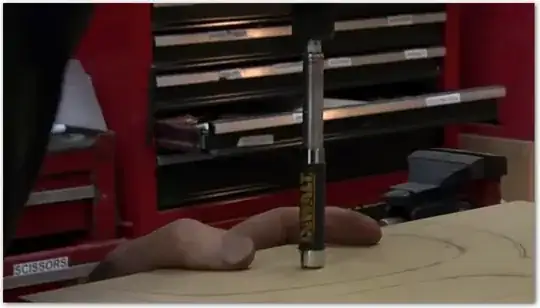
Today I watched an episode of Adam Savage's One Day Builds on YouTube and noticed a kind of bit holder that I haven't seen before:
enter image description here

You can see it in action around the 12:00 mark.

What is this device called and what other options are there to keep screws from slipping?

Oliver Salzburg
  • 197
  • 1
  • 2
  • 9

2 Answers2

10

As for other options: I really like using square drive bits and fasteners (a.k.a "Robertson"):

Square drive screw

They have several advantages over Philips-style screws:

  • The screw easily attaches to the bit and generally stays put (this is the attribute you seem to be looking for)
  • The square drive bit does not "cam out" if you don't apply enough pressure.
  • The bit and fasteners are much more durable, which means you don't generally need to worry about stripping the screw head or damaging the bit.

Admittedly this isn't a viable solution if you need to work with existing fasteners. Also square drive hardware can be a little harder to find, but in my experience Home Depot et al tend to have common fasteners available with square drive heads, and of course anything is available online.

Hank
  • 14,093
  • 10
  • 44
  • 47
  • Basicly anything but philips or flat. Philips was designed to slip to prevent overtightening. Posidrive works well, but due to its similar appearance to philips is confusing. good choices include allen (hex), torx (star), and spline (can't remember the name), which has the unique property that the more you abuse it the better it works. – hildred May 09 '15 at 23:32
  • 1
    The OP is in Germany. These Robertson-head screws may be uncommon in some countries. In much of western Europe, Pozidriv predominates (for the reasons you give) and you may be unlikely to find anything other than slotted, Phillips or Pozidriv in countersunk screws. – RedGrittyBrick May 09 '15 at 23:32
  • @RedGrittyBrick Meanwhile there are plenty of countersunk screws with torx AKA "ISR" AKA "hexalobular internal" available. – Ariser May 10 '15 at 11:07
  • @Ariser: I guess availability in Germany differs from UK. Would that be mostly "machine screws" (i.e. small bolts) rather than, say woodscrews? I'll look harder next time I'm in B&Q/Wickes/Homebase etc. CPC seem to only have "pin torx" not plain torx under machine screws, countersunk. Screwfix have only two sizes of countersunk "star drive" (with pin) under security screws. :-( – RedGrittyBrick May 10 '15 at 11:31
  • @RedGrittyBrick: If you're in the UK: I've used this site in the past for fasteners with unusual (or at least, "not flat/Philips") heads. – psmears May 10 '15 at 16:40
  • @RedGrittyBrick: in Germany today you can get nearly every type of screw with torx drive. It took some years, though. Perhaps I could make a fortune exporting screws to UK? – Ariser May 10 '15 at 18:04
  • This is really a fascinating topic. As @RedGrittyBrick suggests, these screw heads are really uncommon in Germany (at least from my own experience). But I've also never seen the bit holder I mentioned in my question. It seems like we're missing out on some crucial technology over here. – Oliver Salzburg May 10 '15 at 23:45
8

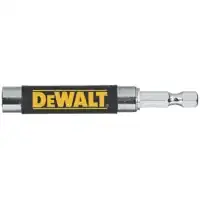
It's called a Magnetic Drive Guide. At least that's what DeWalt calls it.

enter image description here

Tester101
  • 131,561
  • 78
  • 320
  • 610
  • Do you know if those are patented and/or if there is something similar available in the EU? I've never seen DeWalt sold here and I've never seen this kind of guide. – Oliver Salzburg May 09 '15 at 21:51
  • 1
    http://kk.org/cooltools/archives/1366 suggests there's cheaper varients. – Journeyman Geek May 09 '15 at 21:51
  • I have used at least three different bands of these. – hildred May 09 '15 at 23:27
  • 1
    Amazon.de: "DeWalt Schrauber Bit Set 45-teilig, DT71572-QZ ". I'm pretty sure that set contains the sleeve thing you are interested in. However, in my opinion, they aren't that useful. I'd focus on having new driver bits (ie, not worn down), and keeping a straight line between the screw and the driver. (Getting off-axis leads to slipping, which leads to wear on the driver bit, which leads to more slipping.) – Aloysius Defenestrate May 11 '15 at 13:47