Trees
.jpg)
Understand the ecological significance of trees, their role in carbon capture, and their contributions to biodiversity and environmental health.
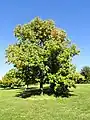
In botany, a tree is a perennial plant with an elongated stem, or trunk, usually supporting branches and leaves. In some usages, the definition of a tree may be narrower, including only woody plants with secondary growth, plants that are usable as lumber or plants above a specified height
- combat climate change
Tree planting is one of the simplest and most effective ways of tackling climate change caused by greenhouse gas. As trees grow they absorb carbon dioxide (CO2), a major greenhouse gas in the atmosphere.
- clean the air
- provide oxygen
- cool the streets and the city - see heat island
- conserve energy
- save water
- help prevent water pollution
- help prevent soil erosion
- shield children from ultra-violet rays
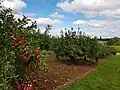
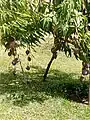
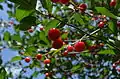
- provide food - see fruit trees; some trees also have edible leaves.
- provide an environment that improves mental well-being
- reduce violence[verification needed] - perhaps by providing a calming and pleasant environment that encourages people to spend time outside.
- increase business traffic - through creating an environment where people want to spend time
- mark the seasons
- create economic opportunities - through their fruit, leaves for mulch...
- bring people together, for tree-plantings and for tree care
- encourage civic pride
- provide a canopy and habitat for wildlife
- block unsightly views and muffle sound
- provide wood
- increase property values
- self-replicate
Trees that provide food
Timber trees

_-_Flickr_-_Jay_Sturner.jpg)
.jpg)
Notes
The basic ideas here come from Top 22 Benefits of Trees, www.treepeople.org but references are not given for the claims made - these could be given here, or in the articles linked from each point.