How to make your home more energy-efficient
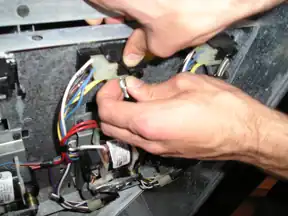
This page lists different home energy retrofits that can improve energy efficiency in standard US homes. Many people in the United States live in homes that were built in the last century. According to the EPA, homes built before the 20th century were generally more efficient.[1] There are many ways you can save money and energy in your home.[2]
Home energy audit
A home energy audit is a way in which you can actually look at what areas of your home you are using, and possibly losing energy. While you could always hire a professional to do this, we recommend you learn how to do this yourself and learn how to do it right.[3] It is your home we are talking about. Here are some useful resources to get going:
Retrofits
Windows
Your windows may be one of the biggest contributing factors as to why your house is too cold in the winter and/or too hot in the summer.[4] There are many different things to try on your windows other than just buying new ones. Individuals might find some things more cost effective than others such as thermal curtains or film on your windows.[5]
Use these helpful tools:
Lighting
One of the simplest ways to save a copious amount of energy is switching your incandescent light bulb to LED lights.[6]
Water
The average US homes wastes thousands of gallons of water a year.[7][8] There are many things to know and ways to save, depending on your budget and how much you are willing to do.[9]
Insulation
Insulation can be a huge help in saving the energy that you are already using but that is being lost by not insulating your home well.
See also
- Wikipedia:Energy audit
- The Secret to Turning Consumers Green - Interesting article from the Wall Street Journal
Notes and references
- ↑ http://epa.gov/region5/sustainable/energyadvice.html
- ↑ Price, B., & Price, J. (1976). The Homeowner's Guide to Saving Energy. Blue Ridge Summit, Pa.: G/L Tab Books.
- ↑ Stephens, B., Carter, E., Gall, E., Earnest, C., Walsh, E., et al. (2011). Home energy-efficiency retrofits. Environmental Health Perspectives, 119(7), A283-a284.
- ↑ http://www.nfrc.org/documents/u-factor.pdf
- ↑ http://en.wikipedia.org/wiki/Window_insulation_film
- ↑ https://www.treehugger.com/most-energy-efficient-led-light-bulbs-5097108
- ↑ http://www.epa.gov/WaterSense/pubs/fixleak.html
- ↑ http://www.jetsongreen.com/2011/04/home-water-waste-info-graphic.html
- ↑ Save water, save energy. (2002). Professional Safety, 47(11), 45-45. Retrieved from http://ezproxy.humboldt.edu/login?url=http://search.proquest.com/docview/200389992?accountid=11532