Compostable plastic
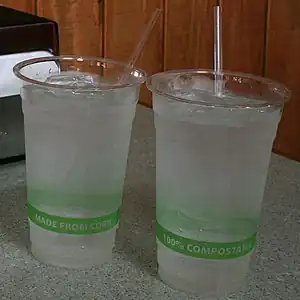
Compostable plastics are materials designed to break down into natural components under the right conditions. Unlike traditional plastics, which can take hundreds of years to decompose, compostable plastics decompose much faster when properly processed, reducing their environmental impact. They are often made from renewable resources like corn starch, sugarcane, or potato starch.
By breaking down, it:
- reduces the buildup of litter in rivers and drains, thus reducing flood risk.
- reduces marine pollution
- reduces air pollution
- potentially reduces waste management dilemmas, if other packaging material also changes to compostable forms - see Compostable packaging.
Benefits of Compostable Plastics
- Waste Reduction: These plastics break down in composting facilities, reducing the amount of waste sent to landfills.
- Lower Pollution: As they decompose, compostable plastics do not release harmful chemicals into the soil or air.
- Renewable Resources: They are made from plant-based materials, reducing reliance on fossil fuels.
Challenges and Considerations
- Proper Disposal: Compostable plastics require specific conditions to break down, such as high temperatures and controlled environments found in industrial composting facilities.
- Misuse: If disposed of incorrectly, these plastics can end up in landfills or recycling streams, where they might not decompose properly.
- Cost: Compostable plastics are often more expensive to produce than traditional plastics, which can limit their widespread use.
Using Compostable Plastics
- Choose Certified Products: Look for plastics labeled as compostable according to industry standards.
- Compost Correctly: Dispose of these items in designated composting facilities to ensure they break down properly.
- Educate Users: Encourage communities to learn the difference between compostable and recyclable plastics to avoid improper disposal.
Biodegradable versus compostable
Some plastics may biodegrade to small fragments of petrochemical-based plastic, reducing but not eliminating their negative impact on the environment.[verification needed]
True compostable materials break down completely into the kinds of materials typically found in compost.
Standards
ASTM International, an international standards organization, defines testing methods for biodegradable plastic, in anaerobic and aerobic conditions and marine environments..[1] There are three ASTM standard specifications addressing biodegradable plastics in composting environments:
- ASTM D6400-04 Standard Specification for Compostable Plastics,[2]
- ASTM D6868 - 03 Standard Specification for Biodegradable Plastics Used as Coatings on Paper and Other Compostable Substrates,[3]
- ASTM D7081 - 05 Standard Specification for Non-Floating Biodegradable Plastics in the Marine Environment.[4]
Notes and references
See also
External links
- Wikipedia:Biodegradable plastic
- Wikipedia:Oxo Biodegradable - polyolefin plastic with small (catalytic) amounts of metal salts to enhance breakdown (biodegrable but not compostable).